





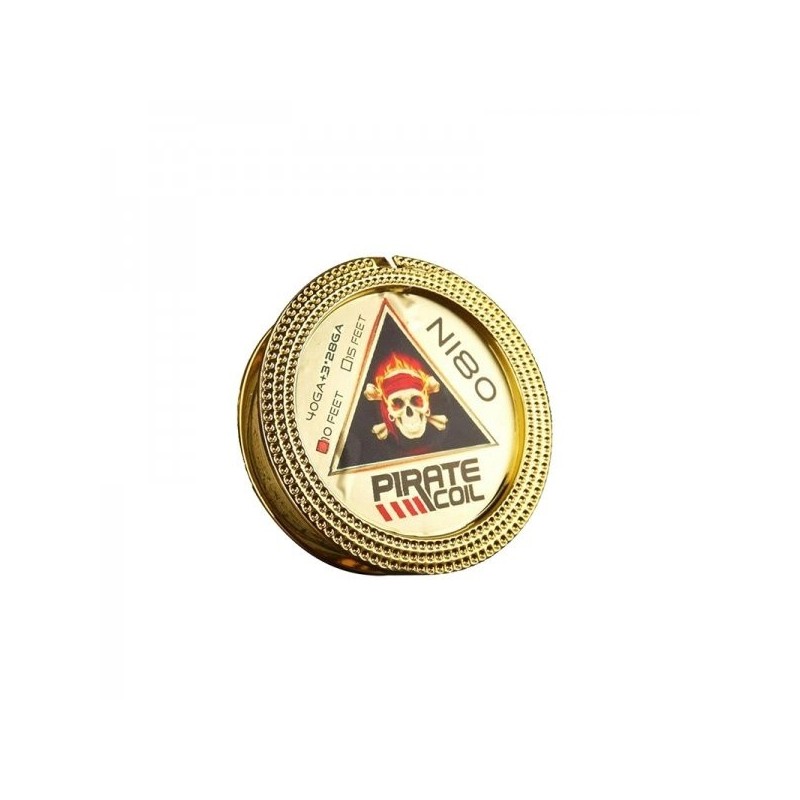


Resistance wire - material for building your own vape coils
Resistance wire refers to metal wire with a defined electrical resistance, used to hand-wind heating coils in rebuildable atomizers. When current passes through the coil, the wire heats up and vaporises the liquid drawn in by the cotton wick. Resistance wire for coils is available in multiple materials (Kanthal, Nichrome, stainless steel), gauges and configurations (round, flat, twisted), allowing precise control over resistance, heat-up time and flavour output to match individual preferences.
Spools containing several metres of wire yield dozens of coil builds at a fraction of the cost of pre-made replacement heads. The best value selection is available at Eliqvapoteur.com.
Vape resistance wire - materials and their properties
The three most widely used materials are Kanthal (an iron-chromium-aluminium alloy), Nichrome 80 (80% nickel, 20% chromium) and stainless steel SS316L. Kanthal is the classic coil building wire — high resistance, easy to work with, holds its shape reliably over time. The natural starting point for beginners. Nichrome 80 heats up faster than Kanthal thanks to lower resistance and better conductivity — an excellent balance of ramp-up time and workability, particularly well-suited to both DTL and MTL builds.
Stainless steel SS316L is the only material that operates in both standard wattage mode and temperature control — the versatile choice for experienced builders. Resistance wire is measured in AWG (American Wire Gauge) — a higher number means thinner wire (28 AWG is thinner than 24 AWG), and thinner wire produces higher resistance at the same coil length.
Wire gauges for coil building - practical applications
Wire diameter directly determines coil resistance and vaping style. Thin vape resistance wire at 28–30 AWG suits MTL coils in the 1.0–1.5 Ω range at 10–15 W — the coil ramps up quickly using minimal power. Mid-range 24–26 AWG is the universal option for restricted direct-to-lung builds at 0.5–0.8 Ω and 20–40 W — the most common starting point for beginners.
Heavy-gauge resistance wire at 20–22 AWG is for advanced direct-to-lung configurations at 0.2–0.4 Ω and 60 W+, producing substantial vapour volume. Resistance wire is sold on spools of roughly 10–30 feet (3–9 metres) — one spool covers 20–50 builds depending on gauge and coil size, at a cost dramatically lower than an equivalent number of pre-built replacement heads.
Building coils with resistance wire - technique and safety
Winding coils from vape wire requires basic tools: a precision screwdriver or coiling rod, pliers, scissors and an ohm reader. Wind the wire around a 2.5–3.5 mm rod for 5–8 wraps, install in the atomizer and check the resistance before firing — the reading must be safe for your battery (generally no lower than 0.15 Ω on regulated mods). Kanthal and Nichrome resistance wire operate in standard wattage mode — set your wattage and vape. Stainless steel requires a mod with temperature control support to take full advantage of the material.
Safety requires a working understanding of Ohm's Law and battery limits — mechanical mods demand advanced knowledge, regulated mods are safer thanks to built-in protections. Resistance wire coils need cleaning every few days through dry firing and brushing — removing residue extends coil life to 2–4 weeks before a rebuild is needed.
FAQ - resistance wire - common questions
Which wire material should I start with?
Kanthal is the best entry point — the higher resistance makes it easier to hit safe values, it winds cleanly without springing back, and it's stable over time with no special mode requirements. 26 AWG or 24 AWG is the go-to gauge for beginners, producing coils in the 0.5–1.0 Ω range that are ideal for learning. Nichrome 80 is a natural next step once you're comfortable with the basics — faster ramp-up and lower resistance require slightly more attention. Avoid stainless steel and exotic materials early on — Kanthal is forgiving of beginner mistakes, and a spool lasts months of experimentation.
How many wraps and what diameter for different vaping styles?
For MTL: 6–8 wraps on a 2.5 mm rod with 28 AWG wire gives approximately 1.2–1.5 Ω — ideal for 12–18 W with strong flavour. For restricted DTL: 5–6 wraps on a 3 mm rod with 24 AWG gives 0.6–0.8 Ω working well at 25–35 W — a solid balance of flavour and vapour. For full DTL: 4–5 wraps on a 3.5 mm rod with 22 AWG gives 0.3–0.4 Ω requiring 50–70 W — large clouds, faster battery and liquid consumption. Start at higher resistances and lower wattages, and work your way down as your confidence and safety knowledge grow.
How long does a hand-built coil last?
A well-maintained resistance wire coil lasts 2–4 weeks with regular cleaning. Every few days, dry fire the coil (without cotton, at low wattage until it glows) and clean with a brush or rinse under water to remove accumulated residue. Replace when: the coil no longer glows evenly after cleaning, visible cracks or deformation appear, resistance has shifted significantly, or a burnt taste persists despite fresh cotton. Dark dessert liquids foul coils faster than clean fruit profiles — replacement every 2 weeks rather than a month may be necessary. One spool of wire covers 30–50 builds, making DIY dramatically cheaper than pre-built coil heads replaced weekly.